A Late-Summer Coastal Lunch Built Around Garden Produce
Plan a late-summer coastal lunch around one garden vegetable, with simple supporting dishes and a make-ahead element that leaves the cook at the table.
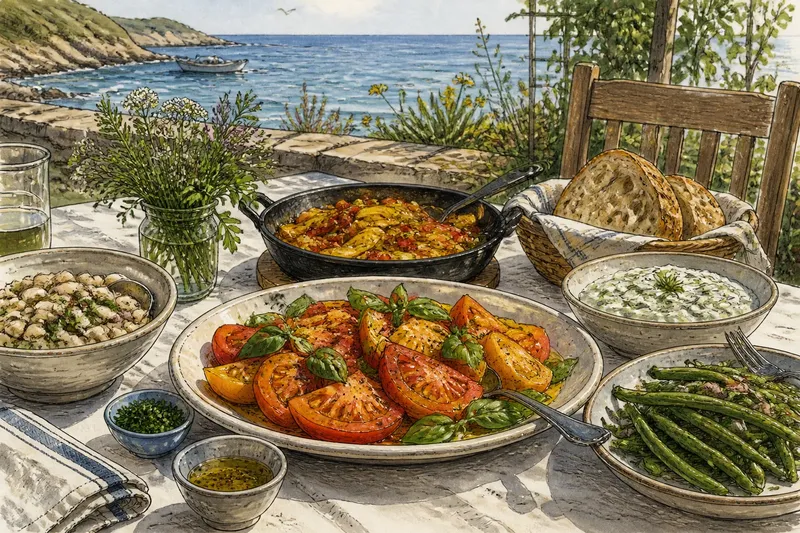
A late-summer coastal lunch works best when one garden vegetable sets the pace. For a late-summer coastal lunch, choose what is plentiful and ready to eat—perhaps tomatoes, zucchini, green beans or sweet peppers—then add a cool make-ahead dish, bread and one modest warm plate. The sea can supply the setting without requiring a seafood centerpiece.
Think of the meal as a handful of field notes rather than a fixed menu. Garden produce changes by place and week; a lunch built around ripe tomatoes on a sheltered patio may call for something else when the morning brings a basket of beans from a windy allotment.
Which vegetable should lead the lunch?
Pick a vegetable that can carry more than one texture or treatment. Tomatoes offer juicy slices and a sharp-edged dressing; zucchini can be shaved raw, grilled or folded into a soft skillet dish; green beans hold their shape in a salad and still make sense warm. One ingredient, used with care, gives the meal a clear center without turning it into a parade of matching dishes.
Start with condition, not ambition. A bowl of soft, fragrant tomatoes wants little beyond salt, good olive oil and torn basil. Firm zucchini can take a hot pan, while beans with a pleasant snap need only brief cooking and a quick dressing. The best choice is often the one that does not need rescuing.
Give the lead vegetable a visible place on the table. Arrange tomato wedges on a broad plate, pile charred zucchini ribbons loosely, or serve beans in a shallow bowl rather than burying them under other ingredients. A little space around the food is useful; so is a serving spoon that is already beside it.
What makes the supporting dishes feel relaxed?
Choose support by contrast, not by adding more of the same. If the main vegetable is juicy and raw, bring in something crisp or creamy. If it is warm and smoky, offer a cool dish with acidity. A bowl of white beans with parsley, a plate of sliced cucumbers with yogurt, or a simple green salad can do the work without asking for another round of elaborate preparation.
Bread is a practical part of the menu, not a decorative afterthought. A country loaf or a sturdy flatbread can catch tomato juices, anchor a spoonful of beans and make the meal feel complete. If the bread is a day old, warming it briefly can restore a pleasant crust; keep it in a basket or wrapped cloth so it remains easy to reach.
One warm dish is enough for a leisurely lunch. A small pan of peppers softened with onion, potatoes boiled until tender and dressed while warm, or a frittata with herbs can add substance without competing with the lead vegetable. Keep portions modest, especially if the day is hot and the meal will stretch into the afternoon.
Salt, acid and herbs are the quiet supports. Lemon, sherry vinegar or red-wine vinegar can brighten vegetables; parsley, mint, basil and dill each bring a different kind of freshness. Put any extra dressing or chopped herbs in small bowls so guests can adjust their own plates rather than asking the cook to make another appearance.
What can be prepared before lunch?
A make-ahead element should improve with a little resting time and remain easy to serve. Marinated white beans are a reliable choice: combine cooked beans with olive oil, lemon or vinegar, minced shallot, parsley and black pepper, then let the flavors settle in a covered bowl. The beans can be served cool or brought closer to room temperature before lunch.
Other useful candidates include a chilled cucumber-yogurt bowl, a jar of herb dressing, or a small tray of roasted peppers. Choose one, not all three. A lunch with too many prepared sides can feel like a pantry clean-out, which is a respectable activity but not a mood.
Keep the make-ahead dish distinct from the vegetable centerpiece. If tomatoes are leading, beans add a gentle, substantial counterpoint; if beans are the star, make a cucumber dish or crisp salad the cooler accompaniment. This division helps every bowl retain a reason to be on the table.
For foods that need refrigeration or careful handling, follow the product label, the maker’s instructions and local food-safety guidance. Set out only what the meal needs, and return perishable food promptly rather than treating a long lunch as an exemption from ordinary care.
How should the meal change with the weather?
On a warm, still day, keep most of the menu cool or room temperature. Serve sliced vegetables, beans, bread and a chilled drink, with the stove doing no more than a brief job. A bowl of ice water with lemon or a pitcher of lightly salted, diluted citrus juice can be more welcome than another rich dish.
When the breeze turns cool, a warm element becomes useful. Heat a pan of zucchini with garlic, make a pot of tender potatoes, or warm bread just before serving. The point is not to produce a second dinner course; it is to give the table one comforting dish that suits the air.
Coastal produce also reflects exposure. Wind and salt spray can leave leaves less pristine and fruit with uneven ripening, while a sheltered garden may offer softer, more delicate produce. Wash and sort what you have, remove damaged portions, and let the ingredient’s actual condition guide the preparation rather than expecting every vegetable to look market-perfect.
What do readers ask about a late-summer coastal lunch?
Can the lunch be entirely vegetarian?
Yes. A lead vegetable, beans or eggs for substance, bread and a fresh salad can make a complete meal without fish or meat. Keep the portions and flavors varied enough that the table feels composed, not as though a main dish has gone missing.
Which vegetable is easiest to build around?
Tomatoes are especially forgiving when ripe: slice them, season them and let their juices mingle with olive oil and herbs. Green beans and zucchini are equally adaptable, though they may need brief cooking to bring out their best texture.
What can replace marinated beans?
Try a bowl of chickpeas with lemon and parsley, a chilled cucumber-yogurt dish, or roasted peppers dressed with vinegar. Choose the option that adds a different texture from the centerpiece and can be served without last-minute fuss.
How do I make the meal feel coastal without serving seafood?
Use what the shoreline setting offers: garden vegetables, local bread, herbs, a breezy outdoor table and a menu that does not demand constant attention. Coastal food culture is also shaped by the work and produce around the water, not only by what comes out of it.
How can one menu flex around the harvest?
Imagine you have a basket of small zucchini, a few ripe tomatoes and a bowl of cooked beans. You shave some zucchini into ribbons, dress the beans with lemon and parsley, arrange the tomatoes with olive oil and salt, then warm a loaf of bread; the expected result is a lunch with crisp, juicy and substantial elements, without requiring several hot dishes.
For a bean-heavy harvest, let the beans lead and switch the make-ahead bowl to cucumbers with yogurt and mint. If peppers are abundant, roast or pan-soften them and serve with beans and bread. If green beans are the best of the week, make them the centerpiece with a sharp dressing, then add tomatoes as a side rather than insisting on a rigid menu.
Keep the components adjustable at the table. Put salt, pepper, oil and vinegar within reach, and serve the vegetable centerpiece in a dish that allows people to take a little or a lot. This is especially useful when a late-summer lunch drifts into conversation and nobody is keeping formal track of courses.
A good late-summer coastal lunch begins with the garden’s strongest offering and lets the rest of the meal stay modest. Choose one vegetable, one make-ahead dish and a few useful supports; then leave room on the table—and in the afternoon—for the meal to last at its own pace.