The Myth of the Perfectly Matched Seafood Plate
A perfectly matched seafood plate needs less than a crowded menu: choose one clear contrast in texture or flavour to make the fish feel complete.
A perfectly matched seafood plate does not need a procession of sauces, garnishes and side dishes. For most meals, one clear contrast—crisp against tender, sharp against rich, or cool against warm—gives the seafood enough company without making dinner feel like a committee meeting.
The useful question is not which ingredients can be paired with a particular fish. It is what the fish already brings to the plate, and what small counterpoint would make that quality easier to notice. The answer changes with the fish, the cooking method, the meal and the people eating it.
What does the seafood already bring?
Start with the cooked fish or shellfish, not a list of fashionable accompaniments. A piece of oily salmon has a full, lingering taste; a mild white fish may be delicate and gently sweet; shrimp can be springy and sweet, while mussels bring their own briny liquid. The plate should respond to what is actually there.
Then look at the cooking. A hot pan may leave a crisp surface and a soft center. Poaching keeps fish tender and moist; grilling can add browned edges and a faint smoky note. These differences matter more than trying to find a perfect match by species name alone.
Choose the quality you want to balance or emphasize. For richness, consider something acidic or crisp. For a delicate texture, use an accompaniment with modest flavor and a little contrast, rather than a heavy sauce that takes over.
When is one contrast enough?
One contrast is usually enough when the seafood is the main event, the cooking already has character, or dinner needs to stay simple. It gives the palate a change without disguising the fish. A wedge of lemon, a spoonful of sharp relish or a handful of crunchy greens can do the job on its own.
Think of contrast as a single useful note, not a shopping list. A rich piece of fish could meet a bright pickle; tender poached cod could sit beside crisp radishes. The rest of the meal can be plain bread, potatoes or rice, chosen for appetite rather than to complete an imagined design.
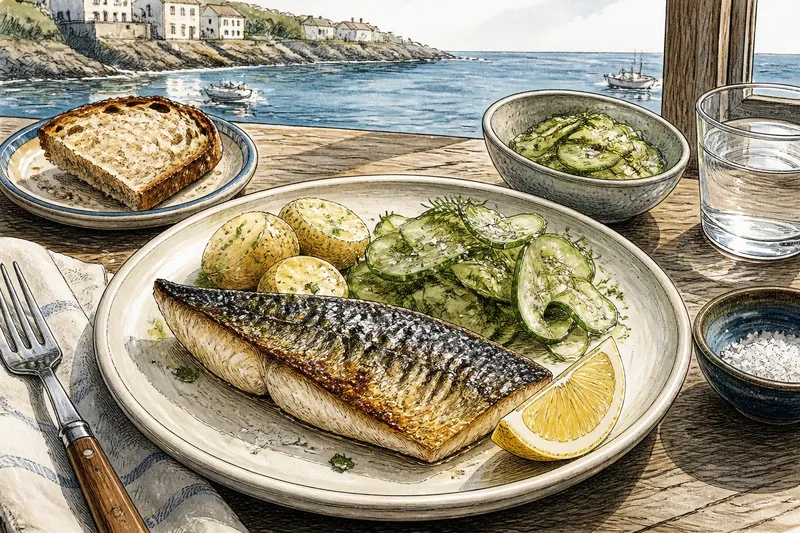
Say you have pan-seared mackerel with crisp skin and soft flesh, plus boiled potatoes already on the table. Add a small dish of thinly sliced cucumber dressed with vinegar and salt. The cool, sharp crunch will cut through the fish’s richness, while the potatoes keep the meal filling; adding a creamy sauce and a second acidic side would make the same point twice.
Keep the contrast small enough that the seafood remains easy to taste.
Which situation fits your meal?
Use the conditions at the table to decide how much pairing the fish needs. A spare plate may feel right for a quick lunch, while guests, a shared platter or a sauce-heavy cooking method may call for an additional element. More food is not automatically more considered food.
Is the fish already rich or oily?
Choose a bright, clean contrast: lemon, vinegar-dressed greens, a sharp salsa or a crisp vegetable pickle. These options refresh the mouth between bites without requiring another rich element.
Is the fish mild and gently cooked?
Keep the addition light, but give it some texture or fragrance. Tender poached hake might suit parsley, spring onion and lemon, or crisp fennel shaved thinly; a thick, assertive sauce can hide the fish rather than help it.
Is the seafood fried or grilled?
Fried seafood benefits from acidity or a cool, crunchy side, such as cabbage dressed with vinegar or a lemony herb sauce. Grilled fish may already have smoky, browned flavors, so a fresh tomato relish or plain greens can supply contrast without adding another cooked, savory layer.
Are you serving a mixed seafood platter?
Use a shared condiment that works across the platter, such as lemon wedges or a restrained herb dressing, and let the different shellfish and fish keep their own character. Several separate sauces can turn a shared plate into a tasting exercise nobody asked to take.
Should the contrast be texture or flavour?
Choose texture when the fish’s flavor is already balanced but the plate feels soft throughout. Crisp lettuce, toasted breadcrumbs, thinly sliced raw vegetables or a firm piece of bread can bring useful crunch. Match the scale of the texture to the fish: delicate flakes do not need a heap of hard, bulky toppings.
Choose flavor when the texture is satisfying but the taste feels heavy, flat or too gentle. A squeeze of citrus, a little mustard, a spoonful of capers or herbs with a clean, green aroma can add definition. Salt can sharpen a dish, but it cannot replace acidity or freshness; adding more salt to a rich fish often makes it simply saltier.
Sometimes the cooking has already supplied one side of the contrast. Crisp-skinned fish has texture built in, so a bright dressing may be more useful than another crunchy garnish. A mild fish cooked in broth may benefit from chopped herbs and a crisp vegetable instead.
Pick one axis first. If the plate still seems incomplete after tasting, add a second element only if it does a different job.
When does a more elaborate pairing make sense?
A single contrast is a good default, not a rule that every plate must remain spare. A richer meal may need a substantial side, and a shared dinner may include dishes chosen for different appetites. The distinction is between adding food for a reason and adding decoration because seafood is assumed to require ceremony.
Consider a sauce that already supplies several qualities. A tomato-based broth can bring acidity, sweetness and moisture; a creamy sauce offers richness and softness. In either case, a simple side may be enough. Add another bold sauce only if it brings a clearly different quality, not merely because there is room on the table.
For a larger meal, make the seafood plate coherent and let variety come from elsewhere. A green salad, bread and roasted vegetables can give diners options without asking every component to perform a direct pairing with every other component.
How do you keep additions from taking over?
Treat sauces and garnishes as accents. Serve a potent sauce in a small bowl so people can decide how much they want, and add delicate herbs close to serving so their aroma stays clear. With a strong pickle or relish, begin with a modest spoonful; more can be added at the table, while a flooded plate is harder to rescue.
Keep the seasoning of the fish in view. If it was salted generously, a salty condiment such as capers or olives may push the whole meal out of balance. If the seafood has a delicate flavor, a little lemon zest may provide fragrance without the sharpness of a large pour of juice.
When the right choice depends on a product label, manufacturer instructions or local rules, follow that source rather than improvising.
What should you ask before adding another thing?
Does the seafood need acidity?
If it tastes rich or leaves a heavy finish, try a small amount of lemon juice or vinegar. If it already tastes bright, leave the acid for another dish.
Is the plate short on crunch?
If the fish and its sides are all soft, add one crisp element such as radish, cabbage or toasted crumbs. If the fish already has a crisp crust, use a different kind of contrast.
Will this sauce improve the fish or cover it?
Taste the sauce alongside a bite of seafood before pouring it over the plate. If the sauce is the first thing you notice, serve it on the side or choose a milder accompaniment.
Would a plain side make the meal more comfortable?
When the seafood and its accent are flavorful, bread, rice or boiled potatoes can provide an easy, neutral base. A quiet side is not a failure of imagination; it is often what lets the main dish remain legible.
What is the simplest decision rule?
Identify the seafood’s strongest quality, then add one thing that balances it or makes it more apparent. For a rich fish, think sharp or fresh; for a tender fish, think crisp or aromatic; for an already crisp or smoky preparation, a clean, cooling side may be enough.
The best version of a perfectly matched seafood plate is often a fish that still tastes like itself. Choose one useful contrast, serve it with room to breathe, and let the second lemon wedge remain optional.